Preconstruction
- Architectural plan review
- Budget and schedule planning
- Permit and approval coordination
- Material planning and procurement strategy
 Call (718) 641-1098
Construction Management
Project planning, field coordination, budgeting, safety awareness, and closeout support for New York construction work.
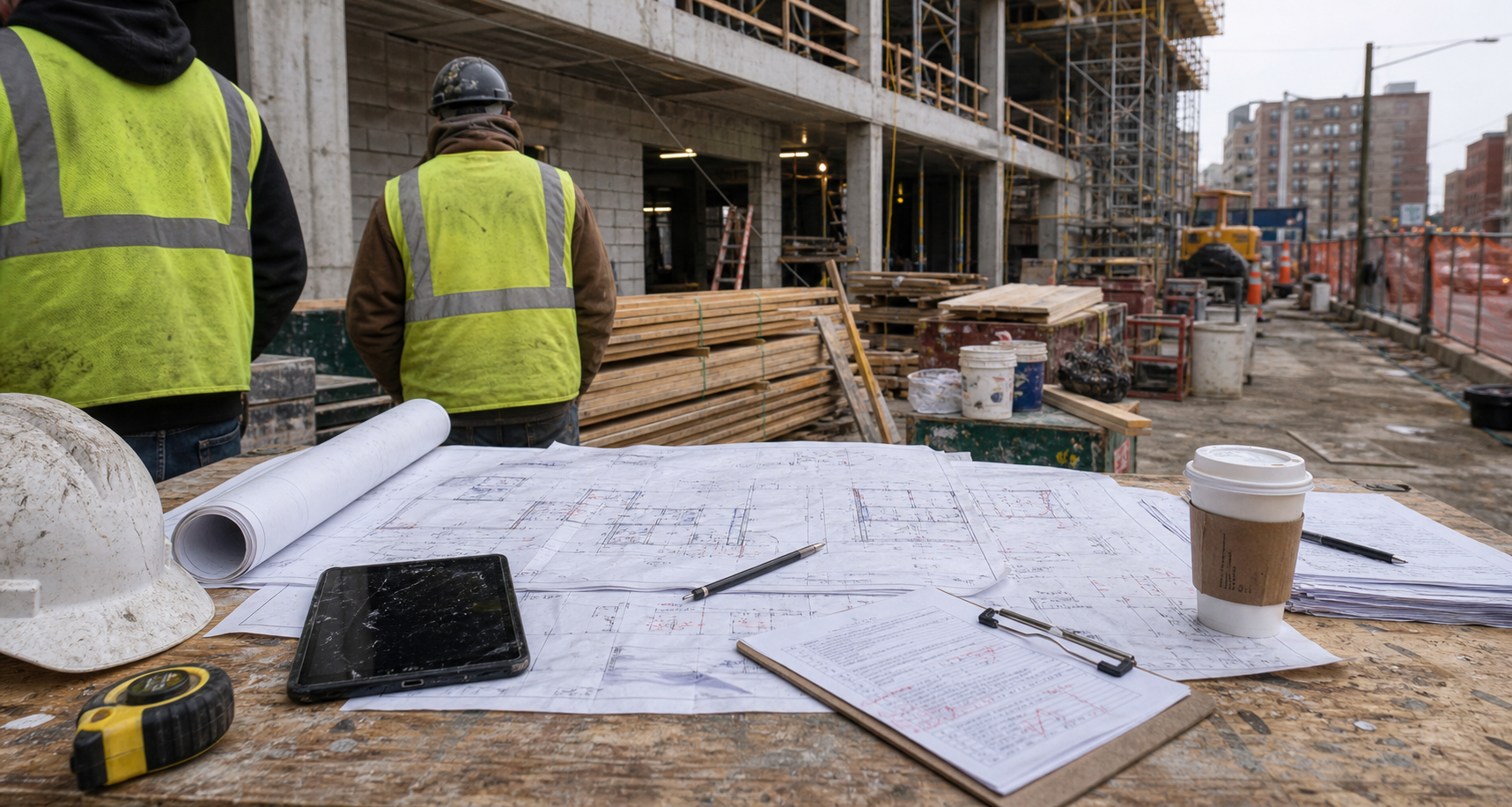
Tahoe Development Group manages construction through clear planning, organized site activity, disciplined communication, and practical follow-through. The management page is built around the details that keep a project moving: budget, schedule, permits, safety, materials, and documentation.
Clarify scope, drawings, budget, schedule, materials, permitting, and responsibility.
Coordinate site setup, trades, equipment, delivery sequencing, and early logistics.
Track daily field conditions, quality, safety, communication, and schedule progress.
Resolve punch lists, inspections, certifications, documentation, and handoff.
Coordinate requirements so compliance is considered as part of the project plan.
Support safer site operations through awareness, coordination, and structured follow-through.
Monitor budgets, sequencing, and trade dependencies before they become larger issues.
Keep closeout, approvals, and owner handoff documents organized through completion.
A general contractor works under a fixed-price contract and is responsible for completing a defined scope of work. A construction manager works on behalf of the owner, providing oversight, coordination, and transparency throughout the process. Construction management typically gives the owner more visibility into actual costs and more control over trade contractor selection and scheduling.
Ideally, during the preconstruction phase — before permits are finalized and before ground is broken. Early involvement allows the construction manager to review drawings for buildability, provide budget feedback, develop a realistic schedule, and help plan the permitting sequence. Bringing one in after construction begins is possible but limits the value they can add.
We coordinate closely with project architects and expediters on permitting and Department of Buildings filings. Our role is to ensure the permitting sequence is planned properly, that required documents are submitted on time, and that inspection scheduling is integrated into the project schedule.
We bid work competitively, evaluate contractors on qualifications and track record as well as price, and manage them through clear scopes of work, scheduled reporting, and on-site coordination. Field supervision and regular site visits are a core part of our construction management service.
Construction management fees vary based on project scope, complexity, and the services required. Fees are typically structured as a percentage of construction cost or as a fixed fee agreed upon during the preconstruction phase. We can discuss pricing in the context of a specific project.
Unforeseen conditions — whether soil contamination, unexpected foundation conditions, or hidden structural elements — are a reality in New York City construction. When they arise, we document them promptly, evaluate options with the design team, and bring realistic solutions to the owner rather than allowing the issue to compound.
Our primary focus is New York City and the immediate Tri-State Area. Contact us to discuss whether your project's location and scope are a fit for our services.